The Renata França method, countless techniques "inspired by" it, Instagram accounts that all look alike: lymphatic drainage has become a crowded market. Here is how to communicate with integrity, show your technique and your setting, choose the right words for your status and steer clear of before-and-after photos that undermine your credibility.
- 1. Why lymphatic drainage has become so hard to communicate
- 2. Beauty or physiotherapy: the words that protect you
- 3. Standing out when everyone is "inspired by"
- 4. Explaining your protocol on video: the reassuring format
- 5. Lymphatic drainage photos: showing without exposing
- 6. Mistakes to avoid
- 7. Lymphatic drainage marketing: frequently asked questions
- In summary
In just a few years, lymphatic drainage has moved from the physiotherapy practice to Instagram feeds across the Paris region. The Renata França method led the way, followed by techniques "inspired by" it, protocols with Brazilian-sounding names and fast-track courses. The result: dozens of accounts posting the same legs, the same flat-stomach promises and the same before-and-after shots in harsh light.
For a serious practitioner, this is a genuine headache. How do you exist amid all that noise without overpromising, and without taking risks with what you claim?
At Agence Dubois we have spent several years photographing and filming wellness practitioners and physiotherapy practices, drainage specialists among them. Our view is simple: in this market, restraint has become an advantage. Here is how to turn it into a brand.
1. Why lymphatic drainage has become so hard to communicate
The treatment has everything social media loves: a result felt quickly, a rhythmic technique, a language of lightness that speaks to a great many women. That is precisely what has drawn so many providers in, with very uneven levels of training.
To a prospective client, everything looks the same. She scrolls past prices that vary threefold, method names she cannot tell apart and promises that grow ever more spectacular. In the end she chooses at random, or on price.
Add to this a distinction the general public barely knows: aesthetic drainage, carried out by beauticians and wellness practitioners, and manual lymphatic drainage for medical purposes, which in France falls to physiotherapists. Both share the same hashtag on Instagram, yet they are not communicated in the same way at all.
Your communication therefore has two jobs at once: to reassure people about how seriously you work, and to show what makes your practice your own.
2. Beauty or physiotherapy: the words that protect you
This is where all your communication starts. The words you use depend on your status, not on what the competition is doing.
If you practise aesthetic drainage
You talk about wellbeing and appearance. The right vocabulary: a feeling of lightness, lighter legs, silhouette, a more relaxed stomach, time for yourself, ritual, a course of sessions. You speak of clients, of a treatment, of a protocol.
Avoid at all costs: "oedema", "medical treatment", "cured water retention", "proven anti-cellulite", "guaranteed inch loss", "body detox", "patient". These words put you on medical ground, which is not yours, and make you answerable for a result nobody can guarantee.
A line such as "many clients feel lighter by the end of the session" is honest and enough. It describes a sensation, not a promise.
If you are a physiotherapist
You can use medical vocabulary, since it is your field: oedema, lymphoedema, post-operative recovery, rehabilitation, patients. But your communication is governed by your profession's code of ethics: information that is fair, clear and honest, with no commercial advertising, no superlatives, no showcased patient testimonials and no promised results.
In practice, your strength lies elsewhere: precision, explanation, the clinical setting. Explaining who medical drainage is for, how a session unfolds, how the pathway works with the referring doctor. It is understated, and it is exactly what a worried patient is looking for.
The question of the Renata França method
If you are trained and certified in the method, say so clearly: it is a real point of reference for your clients. If your protocol is inspired by it without certification, leave no room for doubt: name your own protocol and talk about the training you actually have. Any confusion on this point always backfires, and the use of a method's name may be controlled by those who own it.
These pointers are no substitute for advice from a lawyer, your professional federation or the French physiotherapists' council. If you are unsure about a wording, check before you publish.
3. Standing out when everyone is "inspired by"
If everyone makes the same promise, the difference will not come from the promise. It will come from three things your competitors rarely show.
Your touch
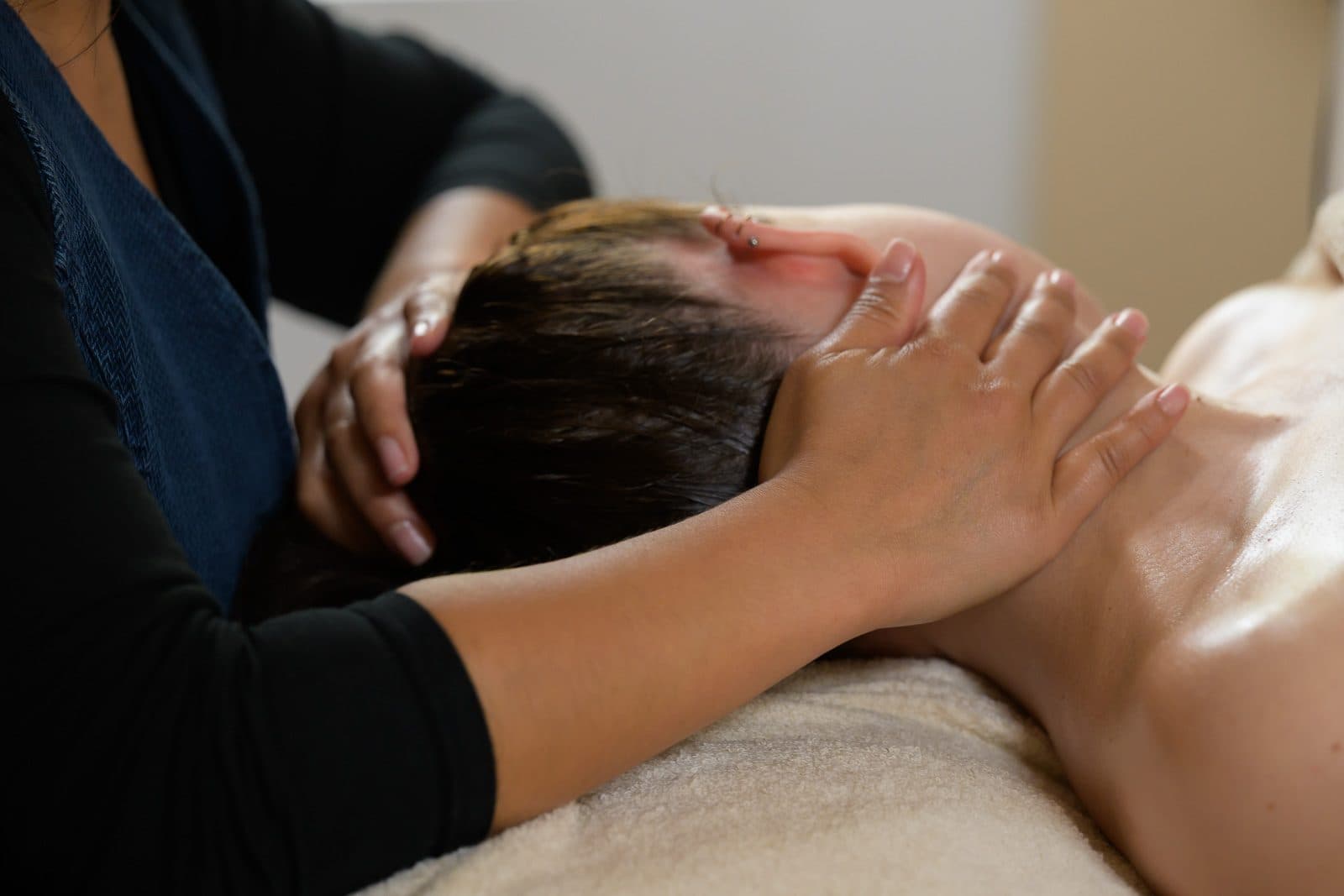
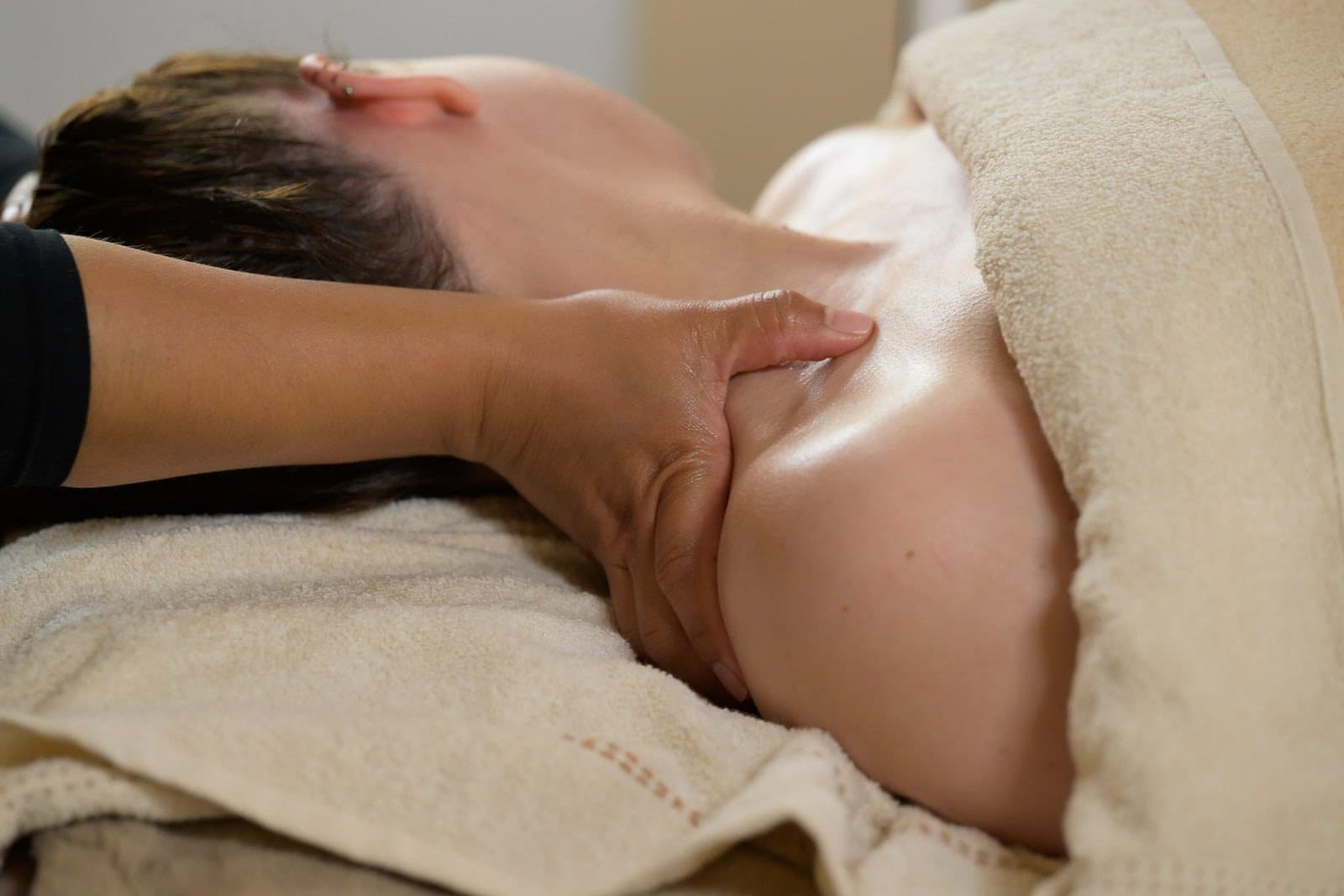
Every practitioner has her own hands: her rhythm, her pressure, the way she links one movement to the next. That is what brings a client back, and it is almost always invisible on Instagram, where all you see are legs and a result. Filming your hands at work, up close, edited to the pace of the treatment itself, shows something no one else can copy.
Your setting
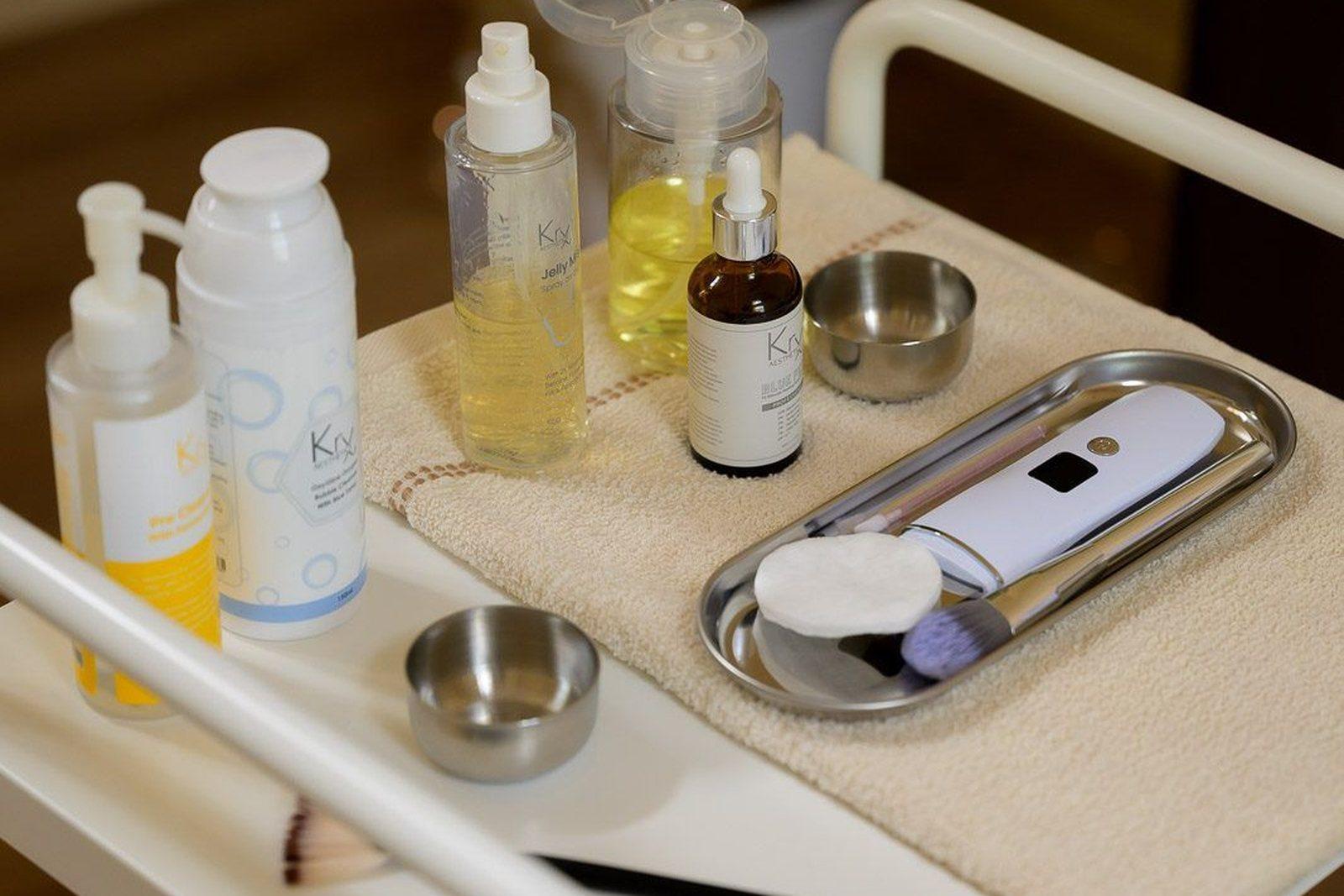
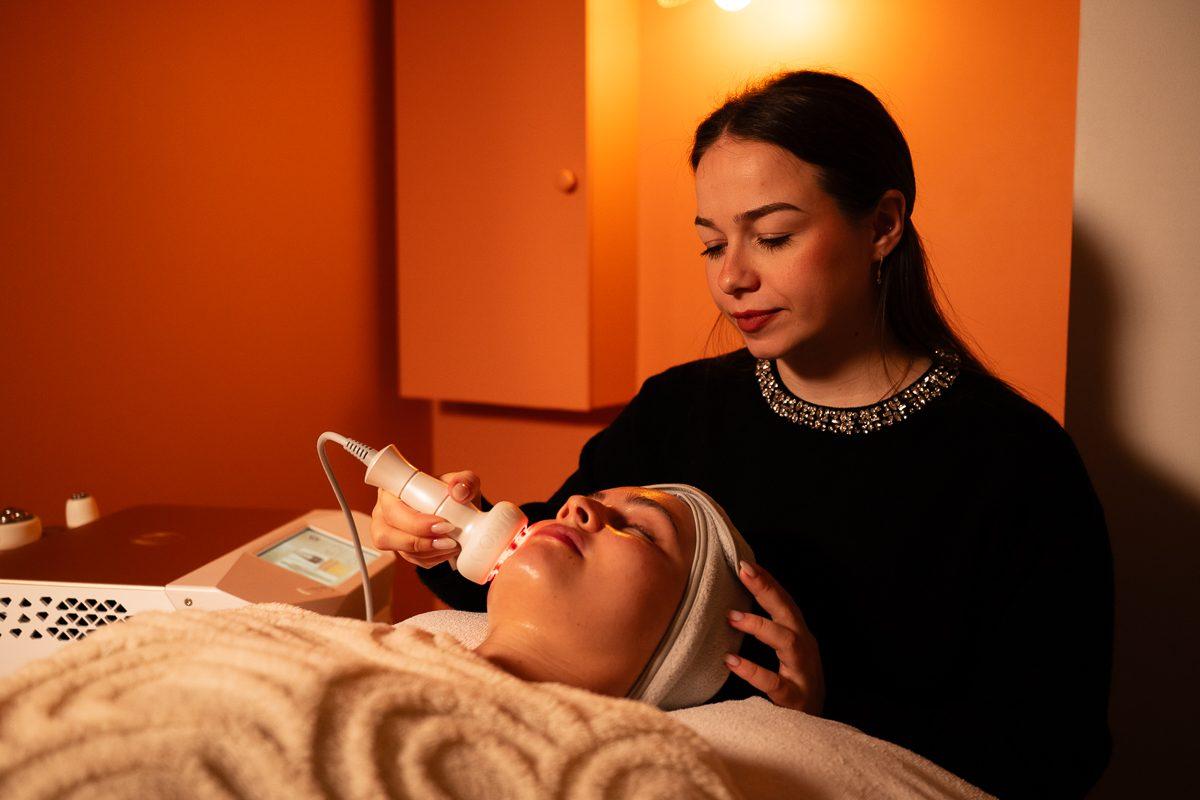
The space says a great deal about how seriously you work. A clean, tidy treatment room with crisp linen and soft light reassures people before the first session. A cluttered background or flat lighting, by contrast, raises doubts whatever your talent. Showing your room, your welcome and your prepared table answers a question the client never asks out loud: will I be in good hands?
Your voice
Your background, your training, why you chose this treatment. A practitioner who calmly explains her view of drainage, to camera or in voice-over, immediately stands apart from an account that churns out generic visuals. That is the foundation of a signature image.
4. Explaining your protocol on video: the reassuring format
Lymphatic drainage still makes people slightly apprehensive: how will I be positioned, what will I keep on, will it hurt? Video answers all of that without you having to write a word.
The "session walkthrough" reel
An editorial reel of 30 to 45 seconds that follows a session from start to finish: the welcome, the initial conversation, getting settled, a few movements filmed in close-up, the final moment of rest. No loud music, no shouting text. Understated subtitles naming each step are enough. It is the format that does the most for trust.
Short educational videos
One question, one answer, 15 to 20 seconds. "How many sessions do I need?", "What should I wear?", "Aesthetic drainage or drainage with a physio: what is the difference?". These videos help you get found on Instagram and feed your stories for weeks.
The styled interview
For a practitioner who wants to establish her positioning, a few minutes of well-filmed speech are worth more than any number of carousels. Your approach, your standards, the way you welcome people. It is content that can then be cut into many short extracts.
To go further on running your account, our article Instagram for beauty salons: the strategy that fills your diary covers the formats and posting rhythm in detail.
5. Lymphatic drainage photos: showing without exposing
Drainage is performed on a partly undressed body. This is where many accounts lose their elegance, and sometimes their credibility.
Choosing discretion
A beautiful drainage photo does not need to show much skin. Hands resting on a calf, an ankle, carefully folded linen, the calm profile of a client: these are the images that evoke the treatment without reducing it to a body. Tight framing, natural light and well-placed linen do all the work.
Think about the person being photographed, too. A client or model must know exactly what will be published and give written consent. For a physiotherapy practice, using patients on camera is out of the question: work with models, or photograph the technique without an identifiable face.
Before-and-after: the main trap
They are everywhere, and they are rarely reliable. A different pose, different light, a different time of day, a held-in breath: the result often looks far more dramatic in a photo than in real life. For an aesthetic practitioner, they amount to a promised result. For a physiotherapist, they run counter to professional ethics.
If you want to convey the effect of the treatment, do it through your clients' own words (with their consent) or through your own explanation, never through a staged photographic comparison.
A consistent bank of images
A professional photo and video session lets you build a coherent library of images in one go: a portrait of the practitioner, the room, the technique, details, atmosphere. That is the format of our Flash shoots: the Essentielle package (€450 excl. VAT, 2 hours on site) is often enough for a first foundation, while the Émotion package (€750 excl. VAT, 4 hours) lets us film a complete protocol and several educational videos. All the details are on our editorial shoot page.
For a concrete example on the medical side, take a look at our work for La Clinique du Drainage, a physiotherapy practice specialising in drainage in Paris 16: an understated project built around the technique and the clinical setting.
6. Mistakes to avoid
A few traps come up again and again among the practitioners and practices we meet.
Copying the accounts that seem to work. Borrowing the promises and hashtags of a competitor with a large following makes you interchangeable. Worse, you inherit her risks without knowing where the limits are.
Promising inches. "Lose 3 cm from your waist after the first session" attracts clients who are disappointed before they arrive and exposes you for nothing. Talk about sensation, ritual and regularity instead.
Blurring beauty and medicine. A beautician talking about post-operative oedema, or a physiotherapist marketing like a beauty salon with discount codes, muddies their image and takes a real risk.
Posting photos taken between two clients. A phone shot under a strip light, with a bag left in the corner, says the opposite of what you mean. Better to post less, but post well.
Forgetting to explain. Many accounts show the result, almost none explain the treatment. Yet it is the explanation that turns a curious visitor into a client.
7. Lymphatic drainage marketing: frequently asked questions
Can I use the Renata França name in my communication?
If you are trained and certified in the method, mentioning your certification is legitimate and reassuring. If you are not, avoid implying otherwise: present your own protocol and the training you actually have. If in doubt, check with the training body concerned.
Are before-and-after photos banned for aesthetic drainage?
Their main problem is fairness: they suggest a guaranteed result and are easy to make misleading. For an aesthetic practitioner, it is better to do without them. For a physiotherapist, they are not compatible with the profession's code of ethics.
What should I post on Instagram for lymphatic drainage?
A session walkthrough reel, short videos answering common questions, photos of your technique and your room, and regularly a few words from you. That mix builds trust far better than a stream of results.
How do I photograph a treatment without making the client uncomfortable?
By working with tight framing, linen that always stays in place, and ideally with a model or a willing client who has agreed to the approach beforehand. A dedicated shoot, outside your appointments, lets you do it calmly.
Can a physiotherapy practice have an Instagram account?
Yes, provided it shares information that is fair, clear and honest: an introduction to the practice and the team, explanations of the treatments, general advice. No commercial advertising, no patient testimonials and no promised results.
In summary
In a lymphatic drainage market crowded with methods "inspired by" others, outbidding no longer pays. What sets a practitioner apart is integrity: vocabulary suited to her status, a technique shown with care, a setting that inspires confidence, a voice that explains rather than promises.
Three pillars are enough to lay the foundations: professional images that respect the discretion the treatment calls for, a video that explains the protocol, and a consistent editorial line over time. The rest is regularity.
At Agence Dubois we work with wellness practitioners and physiotherapy practices in Seine-et-Marne, in Val d'Europe and across the Paris region to give their practice a bespoke, elegant and honest image.
If you would like to rethink how you communicate your lymphatic drainage practice, book a free 30-minute discovery call. Together we will look at your positioning, your current content and how to bring out what makes your practice unique.
Agence Dubois is a digital communication studio dedicated to the beauty and wellness professions, based in Chessy and working across the whole Paris region. Photography, video and editorial strategy for beauty salons, spas, aesthetic medicine and wellness practitioners.
- lymphatic drainage marketing
- lymphatic drainage Instagram
- lymphatic drainage photos
- Renata França practitioner
- stand out lymphatic drainage
- lymphatic drainage video
- aesthetic lymphatic drainage
- physiotherapist lymphatic drainage marketing
- lymphatic drainage Paris region